

Provence is one of the most beautiful regions of France, stretching from the lower Rhône River in the west to the Italian border in the east, all bound by the azure Mediterranean Sea to the south, known as the Provence-Alpes-Côte d’Azur region.
This solo trip is dedicated to a look back at the hilltop villages I visited many years ago and making discoveries in the Luberon, a department of the Vaucluse. Some villages are classified as Plus Beaux Villages de France, and others are notable for historical efforts, artists, and markets. Many of the villages are close together and never far from my home base in Avignon. Provence is famous around the world for its postcard-worthy villages and breathtaking vistas. Where each village has its unique personality and a special allure – it’s love at first sight.
Today, my driver is Veronica, owner of Provans Tours. She is very knowledgeable about the area and speaks Italian, French, English, German, and Russian. She is skilled for all her international clients.

We drive east of Avignon approximately 25km to the edge of the Luberon region, where we stop at L’lsle Sur la Sorgue. It’s a beautiful drive into the countryside with Mont Ventoux high and proud in the distance. It’s a quaint village surrounded by canals fed by the Sorgue River. This picturesque town is a discovery for me.
The town of Isle Sorgue hearkens back to the 19th century when water wheels were at their peak for milling silk, wool, and paper. Today, you can follow the circuit and discover the remaining fifteen mossy-covered waterwheels sprinkled throughout, which once industrialized the area. The Sorgue River is fed by a mysterious spring at the foot of the Vaucluse mountains. It’s the largest natural spring in France and the fifth largest spring in the world. Creating this island in the center of the Sorgue River. Where many enjoy the cold, clear, blue-green waters for kayaking and fishing.
So, what makes this town special? Over the past 30 years or so, L’lsle Sur la Sorgue has become more widely known in France as the International Antique Capital. There are two international antique fairs yearly, and several markets, recognized as the third most important market in France. And the not-to-be-missed floating markets selling their products from flat-bottom boats on the Sorgue river.

We wind our way east through small country roads dotted with olive groves, vineyards, and lavender fields, a perfect Provençal Road trip. We begin to see the iconic hilltop village of Gordes, the Crown Jewel of the Luberon, in the distance. Sitting on the edge of the foothills of the Vaucluse mountains. Classified as Les Plus Beaux Villages de France, and one of the most photographed in Provence.
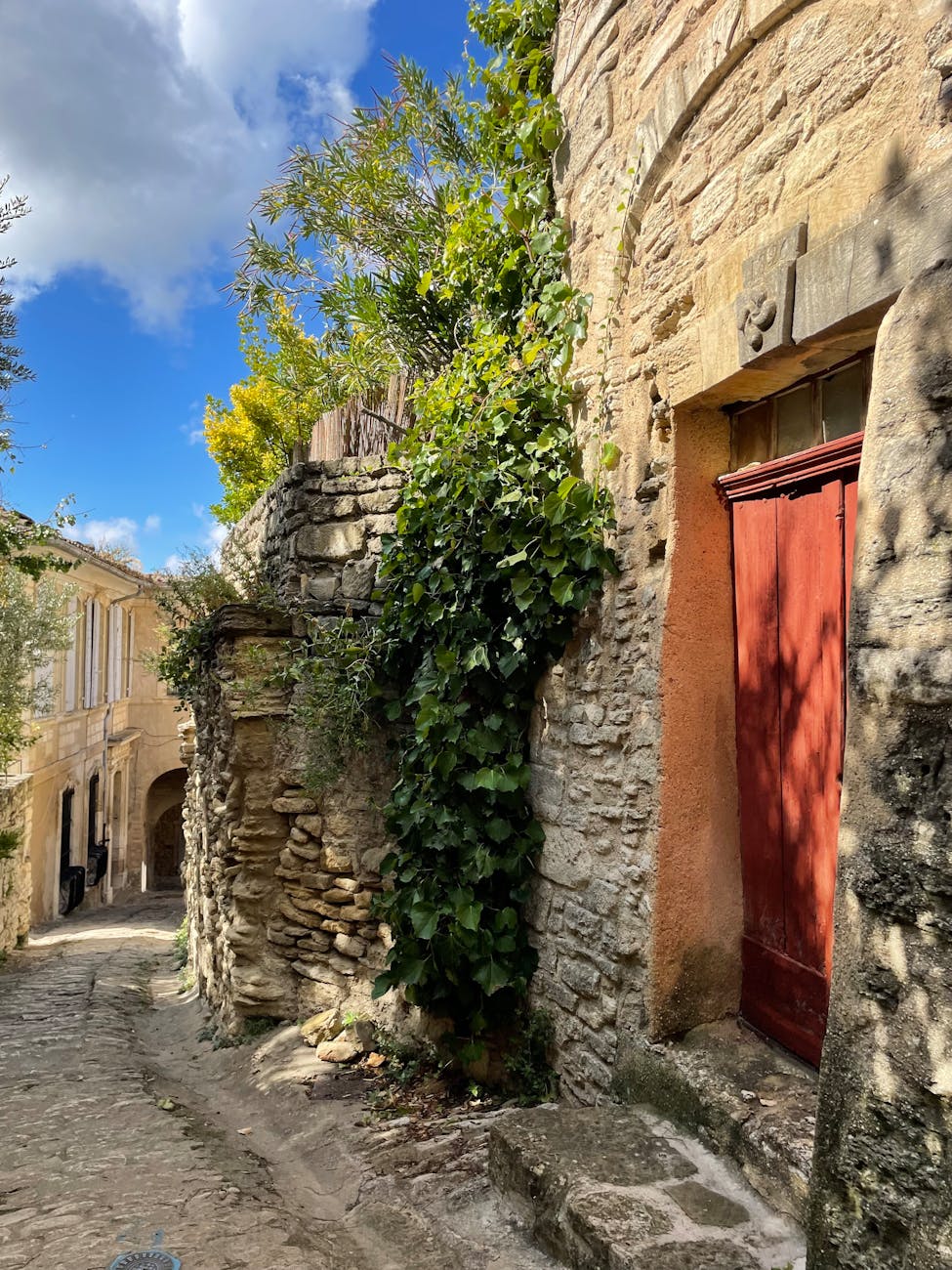
Gordes is a lovely traditional Provençal village perched on a rocky outcrop overlooking the Luberon Regional Nature Park. But first, we make the obligatory photo stop at the cliff’s edge overlooking the Luberon valley with a stunning panoramic view. The village clings to the craggy hillside where it is topped with an 11th-century fortified castle and a 12th-century buttressed church. Where the Provençal light is ever-changing across the basin. Did you know Gordes was a stopover for pilgrims on their way to Santiago de Compostela?
*It has been written that after the birth of Jesus, Balthazar, one of the three wise men, is said to have continued his journey following the star of Bethlehem as far as Les Baux-de-Provence.

We drive southwest to reach Les Baux de Provence. The village of Les Baux is another classified Most Beautiful Village in France, 30 km south of Avignon. Located in the Alpilles mountains, atop a rocky spur topped with castle ruins, looking down into the wilderness of the Rhône delta. This is the second most visited monument in the region, with 1.5 million visitors per year, and where aluminum in bauxite ore was discovered in 1821.
Inside this artistic village, you will find art galleries, luxury boutiques, beautiful hotels, and the not-to-be-missed Carrières de Lumières. It’s a mere 800 meters from the château, held inside Val d’Enfer, a limestone quarry. In 2023, the immersive 3D exhibition features Venice, la Serenissima, and Yves Klein’s infinite Blue. From the tippy top of Les Baux, you can see Arles and the Camargue.
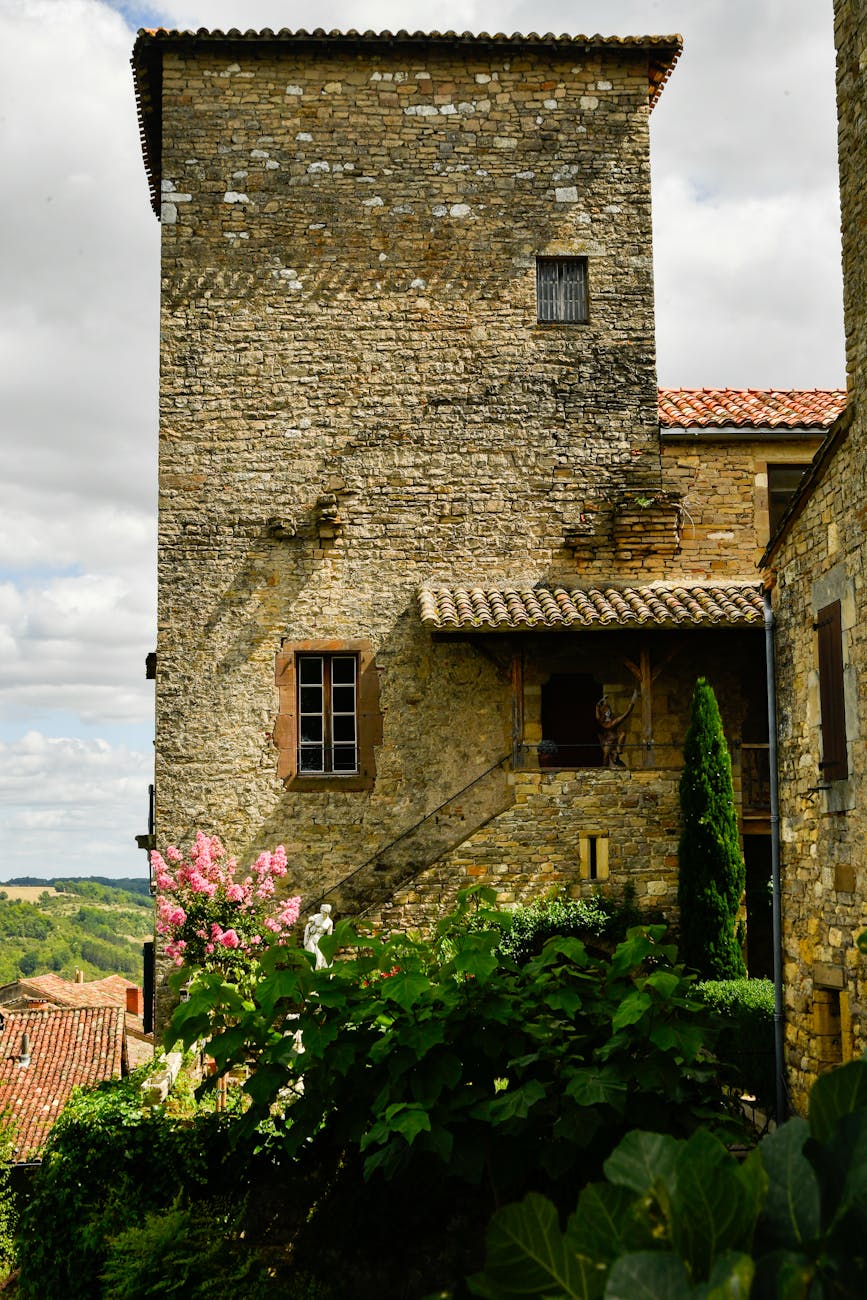
Les Baux exudes the true Provençal culture, where the village is only accessible on foot. There are 22 mostly elderly residents living year-round in the village and carrying on with their daily lives in the upper part of the village. These residents are hardy Gordiens as they park their cars in the middle plateau, 200 meters from the village, even in winter, and climb the ancient cobblestone stairs and pathways upward. Many of the inhabitants have shops on the ground floor of their homes, and welcome visitors all year round.
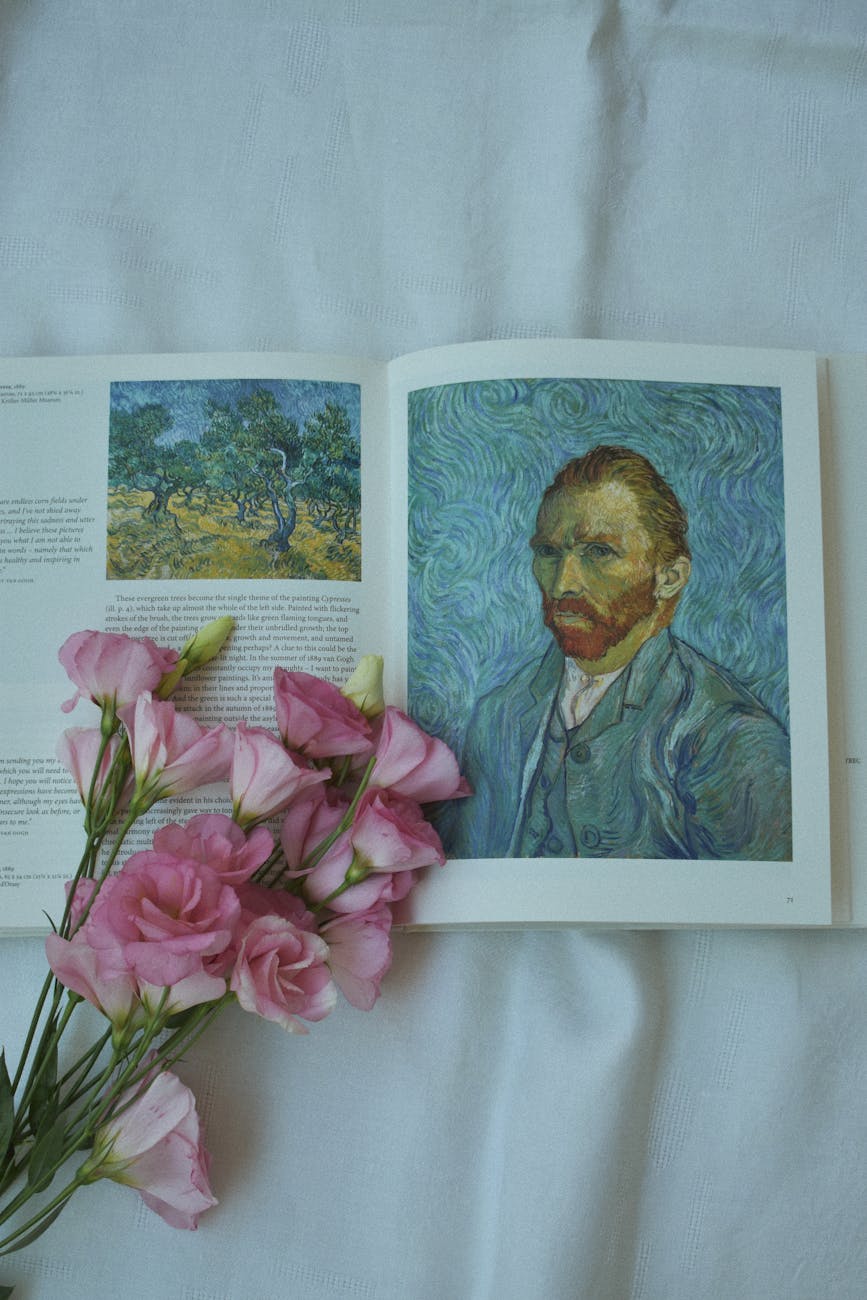
We conclude our day of exploring the historic countryside by heading to the northern edge of Alpilles, a chain of limestone mountains, to Saint Rémy in the Alpilles Regional Nature Park. Maneuvering several roundabouts and narrow roads, we reach Saint Rémy, famous for Vincent Van Gogh and Nostradamus. It is nestled between Avignon and Arles in the department of Bouches-du-Rhone.
Saint Rémy is a chic town with fashionable shops, cafes, and numerous restaurants. Best known for Vincent van Gogh, who was a patient for one year at the Saint-Paul Asylum, after the curious accident with his ear. In that one year, Van Gogh painted his most famous pieces from memory, looking out his window: Starry Night and the Irises, and 100+ more paintings, from outside in the gardens and the village.

Saint Rémy has become a vibrant artists’ community with galleries and antique shops, and this is where you will find a commemorative plaque to Nostradamus. He was born here, and the façade of his home remains. He is still famous today as the man who foresaw the future.
France is just waiting for you to amble through the winding cobblestone streets and discover hidden treasures that will simply take your breath away. Continue this journey by subscribing to www.scribblesandsmiles.net or following on Instagram and Facebook.
By J. Christina

I’m Christie, a Midwest native who is an intrepid traveler, author, and owner of the blog Scribbles and Smiles. Writing under the bespoke pen name J. Christina, sharing stories from European adventures and magical excursions. Since starting my blog, I have contributed articles to France Today, Bonjour Paris, The Good Life France, and Perfectly Provence.
 Belle Provence Travels